
Understanding the Role of the Psychiatric Nurse Practitioner
If you’ve never heard the term PMHNP, you’re not alone. Most people know “psychiatrist” and “therapist,” but the psychiatric mental health nurse practitioner is the provider quietly doing a huge share of the mental health care in this country — and in a lot of clinics, we’re the ones you’ll actually see first.
So let’s clear up what this role is, what it isn’t, and why it matters if you’re trying to find help.
What Is a Psychiatric Nurse Practitioner?
A psychiatric mental health nurse practitioner (PMHNP) is a registered nurse with graduate-level training — a master’s or doctoral degree — specifically in psychiatric and mental health care. That training includes diagnosing mental health conditions, prescribing and managing psychiatric medication, and providing therapy when appropriate. We sit for a national board certification exam before we’re allowed to practice, and we keep that certification current with continuing education, just like any other licensed provider.
Here’s the part people usually don’t expect: in Arizona and many other states, PMHNPs have full practice authority. That means we can evaluate, diagnose, and prescribe independently, without a supervising psychiatrist signing off on every decision. We’re not psychiatrist assistants. We’re licensed independent providers.
How a PMHNP Differs From a Psychiatrist, Therapist, or Primary Care Doctor
This is where a lot of confusion happens, so let’s be direct about it.
- Psychiatrists are medical doctors (MD or DO) who specialize in mental health. Their training path runs through medical school and psychiatric residency. PMHNPs come through nursing education and clinical specialization instead. Both can diagnose and prescribe.
- Therapists and counselors (LCSWs, LPCs, psychologists) provide talk therapy but generally cannot prescribe medication. A PMHNP can do both diagnosis and prescribing, and some of us provide therapy as well, though many focus primarily on medication management and refer out for weekly therapy.
- Primary care doctors can prescribe some psychiatric medications, but mental health isn’t their specialty. If your depression, anxiety, ADHD, or bipolar disorder isn’t responding to a first-line medication from your PCP, that’s usually the point where a psychiatric specialist — PMHNP or psychiatrist — should take over.
What a Visit With a PMHNP Actually Looks Like
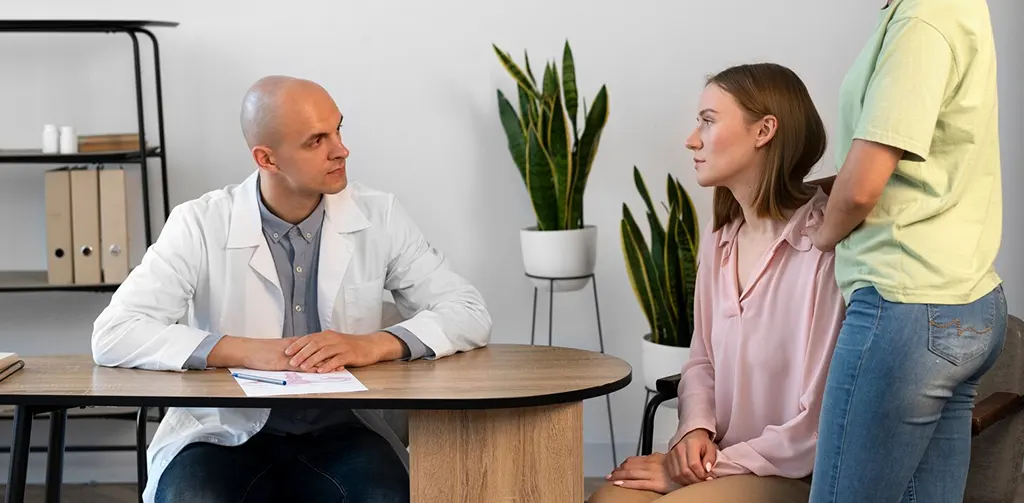
A first appointment usually runs an hour. We’re covering your psychiatric history, current symptoms, medical history, medications you’ve tried, family history, and what’s actually interfering with your life — work, relationships, sleep, all of it. From there, we build a diagnosis and a treatment plan, which might include medication, a referral to therapy, or both.
Follow-up visits are shorter, typically 20 to 30 minutes, and focus on how the medication is working, side effects, and whether anything needs adjusting. This isn’t a one-and-done conversation. Psychiatric medication management is iterative — most people need at least one or two adjustments before landing on what works.
Follow-up visits are shorter, typically 20 to 30 minutes, and focus on how the medication is working, side effects, and whether anything needs adjusting. This isn’t a one-and-done conversation. Psychiatric medication management is iterative — most people need at least one or two adjustments before landing on what works.
When You Should See a PMHNP
If you’re dealing with depression, anxiety, ADHD, bipolar disorder, PTSD, insomnia tied to a mental health condition, or you’ve already tried medication through your primary care doctor without much improvement, a PMHNP is a reasonable next step. We’re also a good option if you want a provider who can manage both medication and, in many cases, incorporate therapy into the same relationship.
If your situation involves acute crisis — active suicidal ideation, psychosis with safety concerns, or a situation requiring hospitalization — that needs emergency care first. Outpatient psychiatric care, including what we do here, picks up after that immediate safety piece is addressed.
If your situation involves acute crisis — active suicidal ideation, psychosis with safety concerns, or a situation requiring hospitalization — that needs emergency care first. Outpatient psychiatric care, including what we do here, picks up after that immediate safety piece is addressed.
The Bottom Line
A psychiatric nurse practitioner is a fully licensed, independently practicing mental health provider trained to diagnose and treat psychiatric conditions, including prescribing medication. We’re not a lesser alternative to a psychiatrist — we’re a different, well-trained path to the same goal: getting you an accurate diagnosis and a treatment plan that actually works.
At Pima Behavioral Health, our psychiatric evaluations and medication management appointments are built around that principle. If you’ve been putting off getting help because you weren’t sure who to call, this is your answer.
At Pima Behavioral Health, our psychiatric evaluations and medication management appointments are built around that principle. If you’ve been putting off getting help because you weren’t sure who to call, this is your answer.
Ready to schedule an evaluation? Contact Pima Behavioral Health at 520-355-1122 today to get started. For more information, please take a look at our website at www.pimabh.com